Showing posts with label macro. Show all posts

Saturday, June 2, 2007

Black Widow Spiderlings

Photo Sharing and Video Hosting at Photobucket


I found Susannah in my garage several weeks ago, and I have been keeping her in a small cage while I figure out how to take pictures of her safely (for both her sake and mine).


Photo Sharing and Video Hosting at Photobucket


Apparently I did a very good job of making her feel at home because she made an egg sac within about 1 week of her coming into our care. Spiders have the ability to save semen in their abdomen and wait until there are favorable environmental conditions before laying eggs. Susannah made two egg sacs in about three weeks (between 200 & 800 eggs).


Photo Sharing and Video Hosting at Photobucket


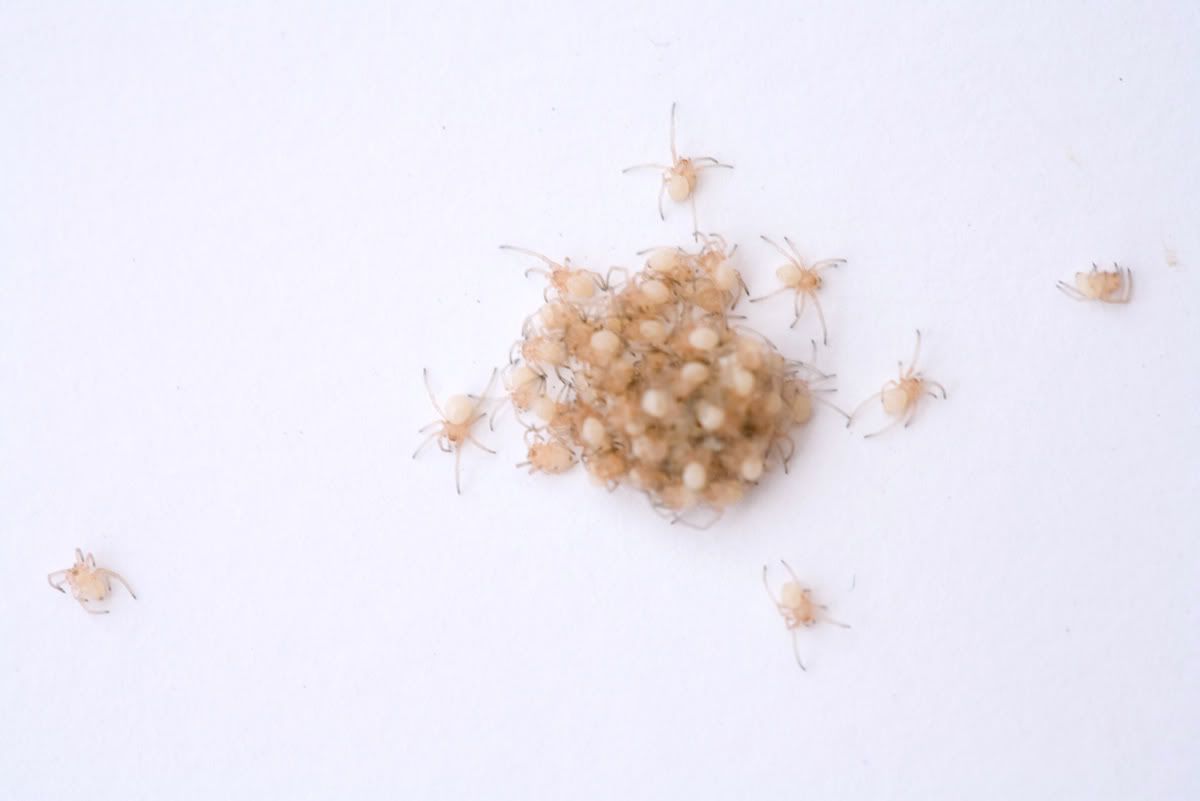
The spiderlings seen here are the result of opening the first egg sac. I put Suzannah and her eggs into the refrigerator for about an hour so that she would go to sleep and I could remove the eggs from the cage. The first egg sac had what I would estimate to be about 150 spiderlings inside it. I saved about 1/4 of them to take pictures of.


Photo Sharing and Video Hosting at Photobucket


I still have the mother, as well as 3 spiderlings that I am hoping will survive to adulthood. If I can manage to get some more photos of these spectacular creatures I will be sure to post them.
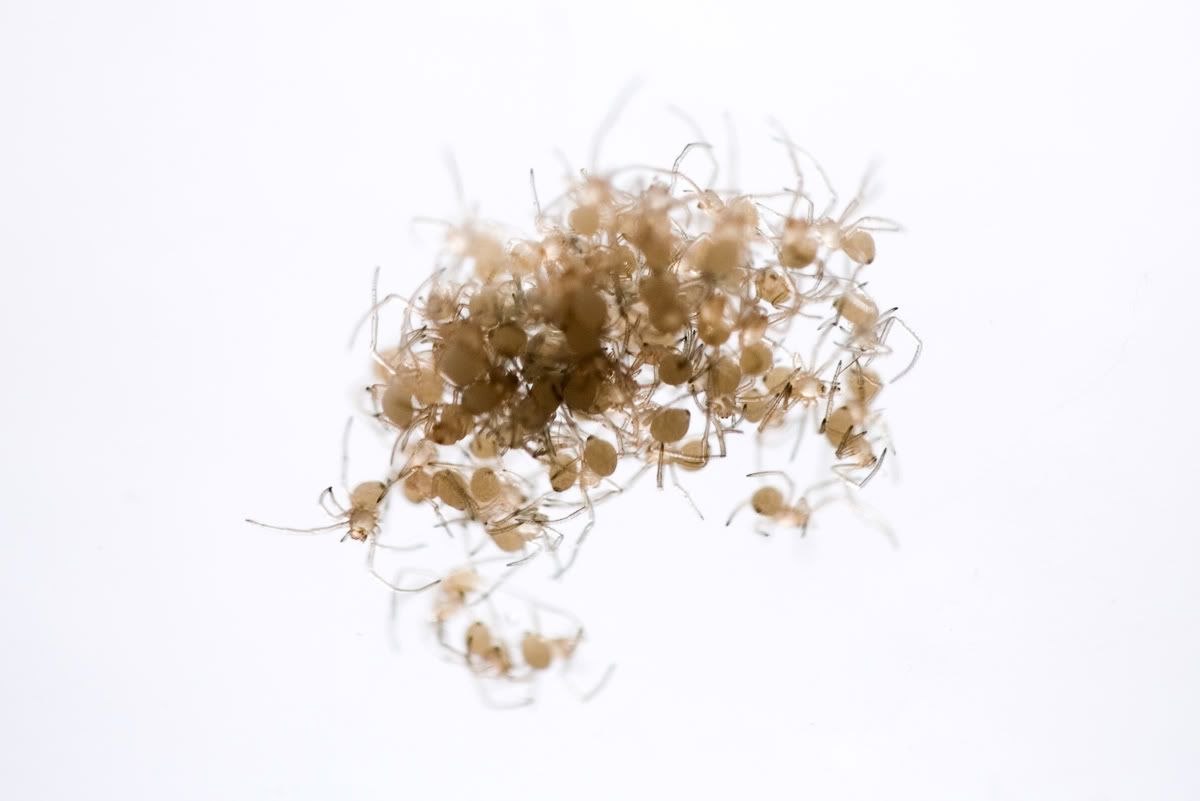

Photo Sharing and Video Hosting at Photobucket


I in no way suggest that you try to take pictures of venomous creatures.

Wednesday, May 16, 2007

Montezuma Well

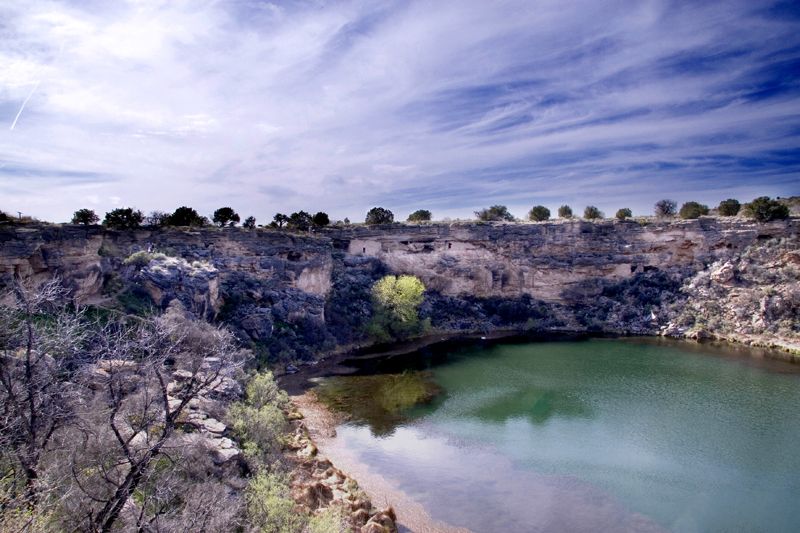
Montezuma Well


Montezuma Well is a natural limestone sinkhole that is fed by underground springs. Through the springs flow 1,400,000 gallons of water each day. Montezuma Castle National Monument was one of the first four sites to be designated a National Monument in 1906, along with Devils Tower, Petrified Forest (which is now a National Park), and El Morro. Montezuma Well was added to Montezuma Castle and designated a National Monument in 1947.


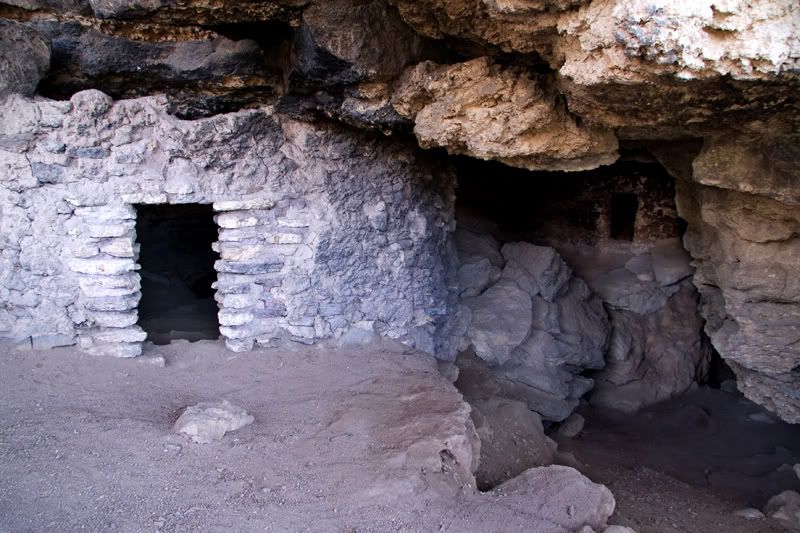
Lower Cliff Dwelling


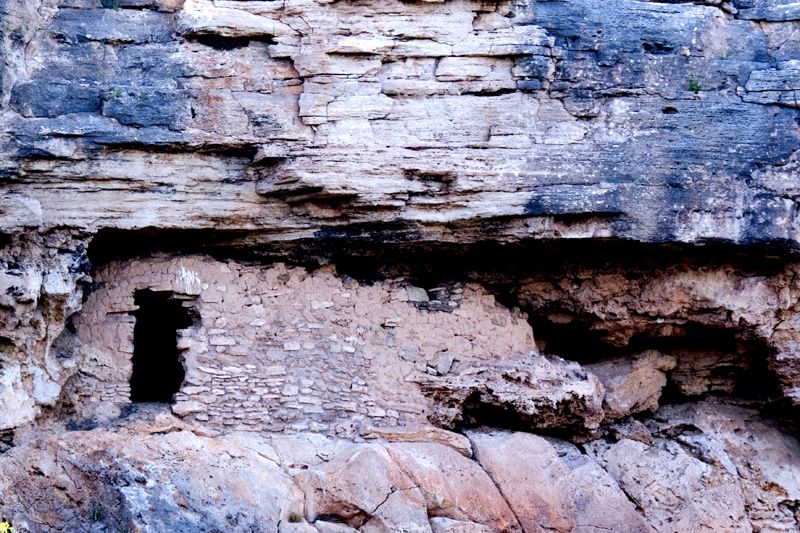
The site showcases and preserves cliff dewllings and pithouses dating back 1,400 years, as well as an ancient irrigation canal used to water crops. This region was inhabited by the Hohokam, and the Sinagua Indans between around 600 A.D. and the 1400s.


Upper Cliff Dwelling


A 1/3 mile trail showcases several of the ruins and takes you to the waters edge inside the sinkhole. Wildlife is abundant, with many species of waterfowl making their winter home here. Trailside photography fairly easy, and overlooks provide fantastic views of the well.


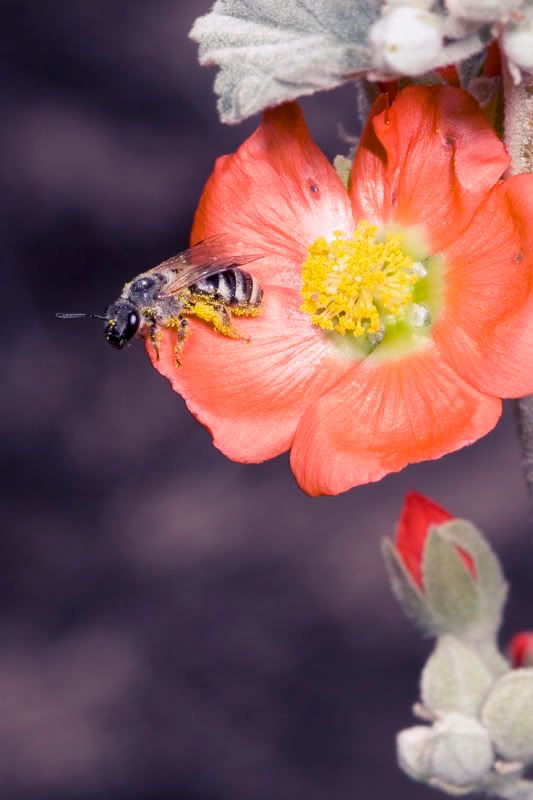
Bee on Desert Globemallow


The ruins can be difficult to photograph because of the wide dynamic range of the locations. The ruins are usually in shadow while the sky is very bright, making it very tricky to have detail throughout the photo (avoiding having part of the photo being totally washed out or in darkeness). With todays "digital alternatives" you can achieve a photograph that more accurately resembles reality by setting your camera up on a tripod, taking bracketed exposures (over, under, and normal exposure), and then combining the photos in an image editing program. This can allow you to capture the beautiful Arizona sky as well as the ruins without losing detail in either. This technique is especially useful at these sites since access is limited at the prime photo times (sunrise and sunset).


Trailside Foliage


Montezuma Well is located in Rimrock, AZ, just a few miles North of Camp Verde. To get there take the McGuireville exit (exit 293) off of I-17. Follow Beaver Creek Rd for about 3 miles, and the monument entrance will be on the right soon after the road turns to dirt. Entrance to the park is free, and the gates are open from 8:00 A.M. to 5:00 P.M.

Thursday, March 29, 2007

Golden Paper Wasp Nest


This paper wasp made its nest right inside the alcove by my front door. It was fascinating to watch as the wasp would go around to each cell, in turn, and check on the egg inside. The wasp would form a drop of water on its mouth and apply it to the egg to keep it moist, and would then stand over the whole nest and beat its wings rapidly to cool the eggs down in the unseasonably warm weather. After retreating to the top of the nest for a couple of minutes it would go through the cycle again, making sure that each egg was safe and healthy.


Using a step stool I was able to watch the wasp dote on its eggs for quite a while, and I got quite a few good pictures with my 100mm f/2.8 macro lens. I keep the aperture wide open most of the time at ISO 400, but bumped it up to f/8 whenever I wanted to have more than about 1/4 inch depth of field.


Unfortunately the nest met its demise recently. I am not sure whether it was the strong winds of the last couple of days, or a UPS delivery driver that thought he was doing me a favor that did the deed, but I will definitely be keeping my eyes open for another nest this season to see how everything progresses.

Tuesday, March 27, 2007

Macro Photography in an Abandoned Corral

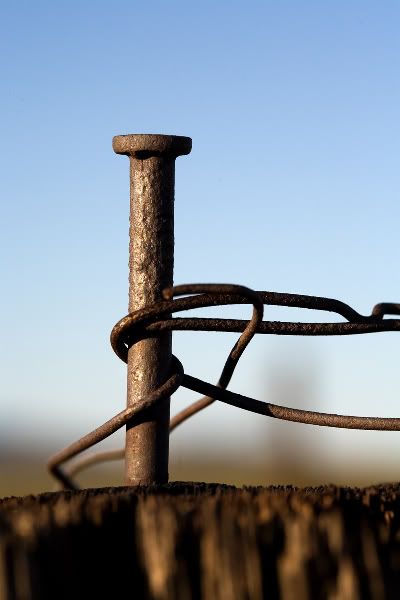
Nail on Blue

I have been driving by this abandoned corral for a few years and have been telling myself to stop and take pictures of it for nearly as long. I try to bring my GPS with me wherever I go so that I can mark interesting photo sites to come back to at a later date. This gives me a ready cache of photo sites to choose from whenever I go out.

In the Chute

Unfortunately on the day that I decided to stop the light was very harsh and it was very dusty, making any wide angle or landscape shots very difficult. I only managed to take one decent photo of the corral, and that was standing inside the chute shooting away from the sun.

Barbed Wire Cross

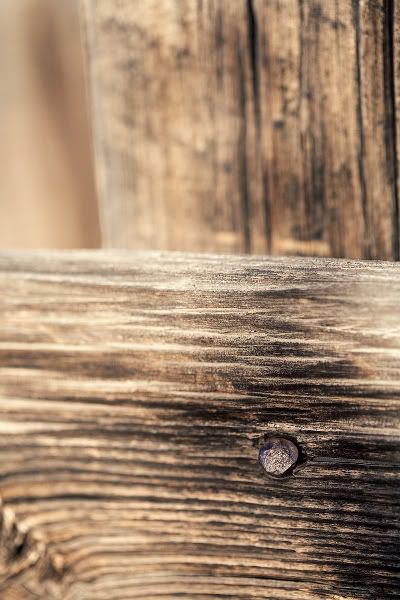
Rather than wasting my time on photos that would not turn out due to poor conditions, I stuck mostly to my macro lens, a Canon 100mm f/2.8. The rotting wood, rusted barbed wire, and old nails provided great texture that really popped against the soft background.

Barbed Wire Knot

This site was very fun to work around, but caution was needed to keep from stepping through rotting boards or getting caught on the barbed wire and cactus. I always wear tall hiking boots and jeans when out in the desert, regardless of how hot it is. They offer much needed protection from cactus spines, barbed wire, and critters.

Old Joint

This site is located on New River Road about 4 miles South of I-17, or 6.5 miles North of the Carefree Highway between New River and Lake Pleasant. Other great sites in the area are Lake Pleasant, the Carefree Highway, which is a designated scenic drive that is covered with saguaros, and the Hells Canyon Wilderness. With the ever expanding Phoenix Metro area, housing developments are already planned all the way up to and beyond the Carefree Highway, so enjoy the relative peace and quiet while you can.